

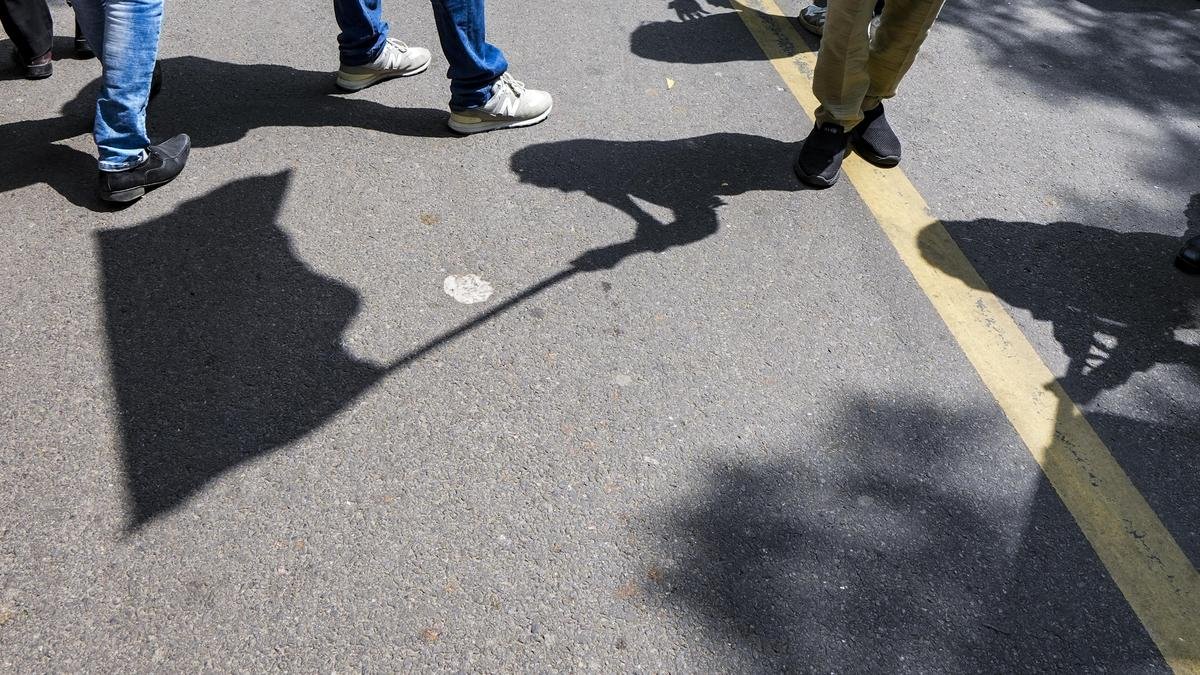
For more than three decades, Jantar Mantar has served as the focal point of democratic dissent in the national capital. Despite its reputation as Delhi’s designated protest site, Jantar Mantar’s status has repeatedly been tested by security concerns, environmental regulations and court interventions.
On Monday (August 3, 2026), the Supreme Court of India directed the Centre to consider a plea seeking to discontinue Jantar Mantar as a designated site for protests and designate Ramlila Maidan instead as the principal protest venue for the national capital.
As per experts, Ramlila Maidan has always existed as an alternative protest site, but it is the proximity to the Parliament that drove the protesters to Jantar Mantar, just like its earlier counterpart, Boat Club did.
Why is Jantar Mantar important?
Located in the heart of New Delhi, Jantar Mantar lies close to Parliament and several central government offices. Its location allows protesters to demonstrate within sight of the country’s political establishment while remaining outside the high-security zones around Parliament. “Over the years, this proximity has made it the preferred venue for groups seeking to draw the government’s attention,” said Om Prakash Mishra, a former IPS Officer who served in various positions in Delhi Police.
How did it become the designated protest site?
Before the early 1990s, Delhi’s principal venue for demonstrations was the Boat Club lawns along Rajpath (now Kartavya Path). The site witnessed some of independent India’s largest political rallies. “As part of crowd control measures, it is important to have enough space for the movement of both protesters and policemen. In case of a police action, protesters should also have space to retreat. That kind of manoeuvring was possible at Boat Club,” Mr. Mishra said.
The turning point came in 1988, when a massive farmers’ rally led by farmers’ leader Mahendra Singh Tikait drew lakhs of protesters to the Boat Club, the success of which led to the formation of the Bharatiya Kisan Union. “The scale of the gathering raised concerns about security and disruption in the capital’s administrative centre,” Mr. Mishra said.
Following the massive farmers’ rally and the heightened security concerns during the Ram Janmabhoomi-Babri Masjid movement, the Delhi administration discontinued large demonstrations at Boat Club. By 1993, the police had begun directing protests to Jantar Mantar—a move justified on grounds of traffic management and crowd control.
There was no statute or formal government notification at that time designating Jantar Mantar as Delhi’s official protest site. Instead, it acquired that status through consistent executive practice before being regulated through Delhi Police Standing Orders in the following decade.
In 2003, a Delhi Police Standing Order 309 mentioned Jantar Mantar and Ramlila Maidan as the protest sites where rallies and processions could take place, and marches could be held symbolically. “The numbers then decided the protest site: if less than 5,000, Jantar Mantar could be the protest site. If more than 5,000 but less than 50,000, protesters had to be guided to use Ramlila Maidan for their protests. If the footfall was to be greater than 50,000, the order stated Burari grounds and even bigger, protesters were guided towards Narela,” said Rajan Bhagat, formed Deputy Commissioner of Police.
All is not well: On the protests in Delhi
Mr. Bhagat added that over the years since 1993, Jantar Mantar became synonymous with peaceful public demonstrations. It saw the Anna Hazare movement against corruption in 2011-12, Nirbhaya protests in 2012, hosted protests by ex-servicemen demanding One Rank One Pension, farmers’ organisations, students, women’s rights groups, government employees, disability rights campaigners and several other civil society movements. “For many organisations, gathering at Jantar Mantar has become an established way of taking grievances directly to the nation’s policymakers,” Mr. Bhagat said.
Why was it contentious?
While its central location, less than three kilometres from the Parliament, has symbolically replaced the erstwhile marches to Parliament, which were banned in 1966 following agitations against Indira Gandhi’s anti-cow slaughter law, it has also been a source of contention for the residents close to Jantar Mantar. In 2017, the National Green Tribunal (NGT) directed the protests to stop at Jantar Mantar after residents raised concerns over noise, traffic congestion and prolonged sit-ins. Authorities have also cited security challenges arising from demonstrations near key government institutions.
These competing interests have fuelled a long-running debate over how to balance citizens’ constitutional right to peaceful protest with the need to maintain public order and minimise inconvenience to local residents.
What have the courts said?
In October 2017, the National Green Tribunal directed that protests at Jantar Mantar be stopped, citing noise pollution and inconvenience to residents, and suggested that demonstrations be shifted elsewhere. The tribunal cited three grounds while issuing these directions — there is no executive order that demarcates Jantar Mantar as a ‘protest site’, that it’s marked as a ‘residential area’ in the Delhi Master Plan and finally, that the agitations caused noise pollution.
The order triggered widespread criticism from activists and civil society groups, who argued that it unduly restricted the right to protest.
In July 2018, the Supreme Court set aside the blanket prohibition, holding that public protests could not be completely banned at Jantar Mantar or the Boat Club. Instead, it directed authorities to frame guidelines that would balance the rights of protesters with those of residents. The Delhi Police then released its guidelines as per Standing Order 10 in 2018, demarcating Jantar Mantar as a protest site for up to 1,000 protesters. For a number higher than this, the permission is to be given for Ramlila Maidan only, the order said.
What is the position today?
Jantar Mantar continues to function as Delhi’s principal protest venue, though demonstrations are regulated through permissions issued by Delhi Police. Organisers must give an undertaking of compliance with guidelines related to crowd size, duration, use of loudspeakers and security arrangements.
“Having a suitable location is very important for crowd management. Ramlila Maidan is an ideal venue often used for political rallies and protests, as it has separate gates for VVIP movement and for participants. It is an enclosed space which establishes an overall security architecture,” Mr. Mishra said.
The 15-acre Ramlila Maidan, run by the North Delhi Municipal Corporation, also continues to be available for protests, demonstrations and large events, but at a fee, for about ₹50,000 a day.
Published – August 04, 2026 03:39 pm IST