

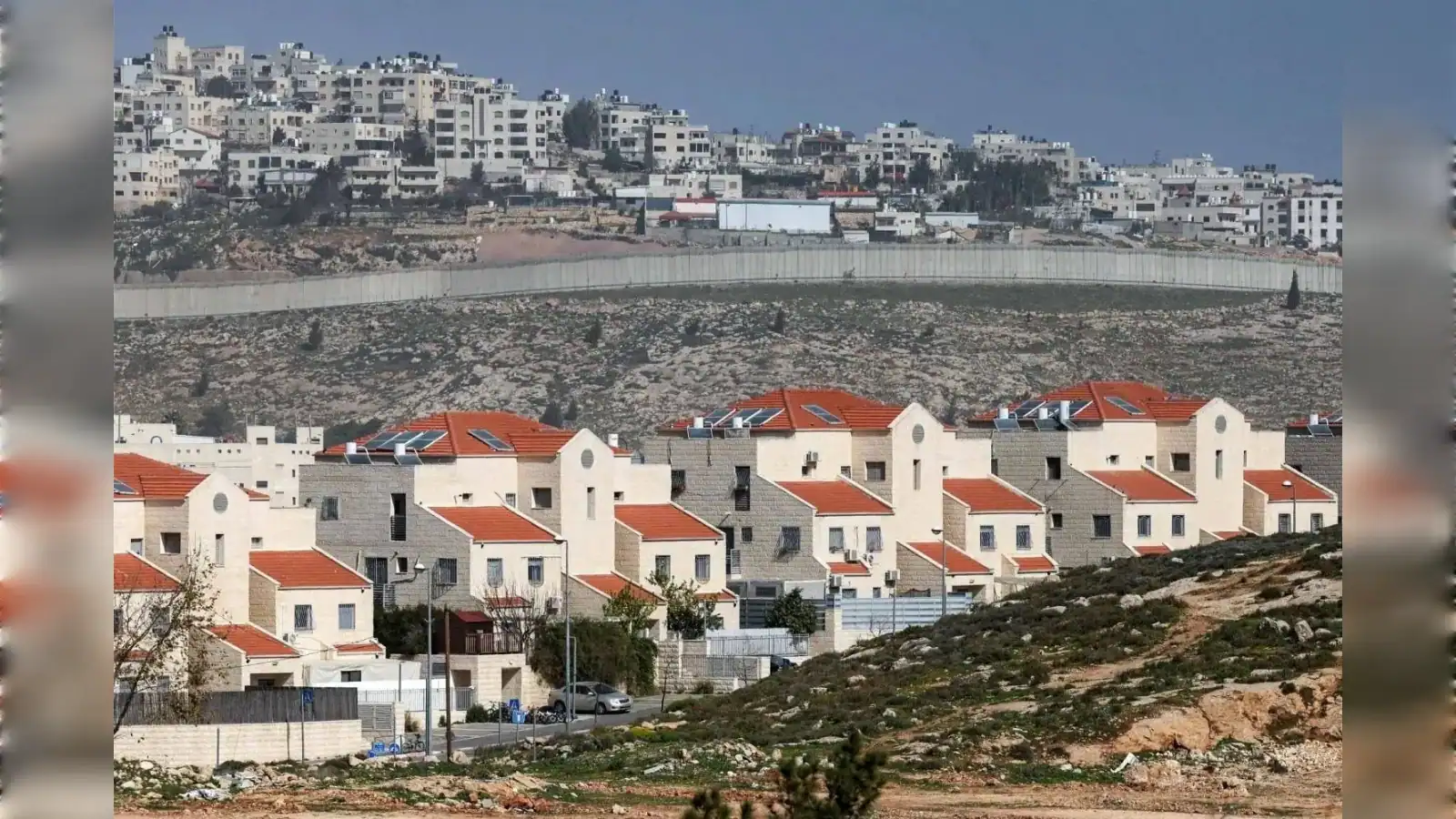
Hyderabad: Ahead of Prime Minister Narendra Modi’s scheduled visit to Israel, India has refrained from signing a joint statement by 85 UN member states condemning Israel’s decision to seize large areas of the occupied West Bank.
Modi will travel to Israel on a two-day visit from February 25 to 26, where he will address the country’s Parliament, the Knesset, the country’s Prime Minister Benjamin Netanyahu said. This would be his second visit to Israel, the first being in July 2017, which was also the first ever by an Indian Prime Minister to the Jewish state.
Modi is likely to touch upon all issues of bilateral and regional interest during his two-day visit.
However, India’s absence from the declaration underscores its current diplomatic position on the Israel-Palestine issue. In recent UN votes related to the Gaza war, New Delhi has frequently abstained while calling for dialogue and a negotiated solution. New Delhi has maintained that a durable peace can only be achieved through direct negotiations between the parties.
Why Israel’s land registration rules are contentious
On February 15, Israel announced that it would begin a land regulation process in a large part of the occupied West Bank. This paves the way for the resumption of “settlement of land title” processes, which had been frozen in the West Bank since the Mideast War in 1967. It means that when Israel begins the land registration process for a certain area, anyone with a claim to the land must submit documents proving ownership.
Under the decision, Israeli authorities will announce certain areas to undergo registration, which will force anyone who has a claim to the land to prove their ownership, and if they fail to do so, the land will be registered in Israel’s name.
The West Bank was divided into three administrative areas under the Oslo Agreement. Area A is under full Palestinian control, while Area B is under Palestinian civil administration with Israeli security control. Area C, which makes up around 61 per cent of the West Bank, remains under Israeli control pending a permanent status agreement.
More than 700,000 Israelis live in the occupied West Bank and east Jerusalem, territories captured by Israel in 1967 from Jordan and sought by the Palestinians for a future state. The international community overwhelmingly considers Israeli settlement construction in these areas to be illegal and an obstacle to peace.
Also Read
Israel’s actions violate international law: 85 countries
The statement condemning Israel’s move, released by the Palestinian mission to the United Nations on Tuesday, February 17, was endorsed by three major international organisations, such as the League of Arab States, the Organisation of Islamic Cooperation (OIC) and the European Union (EU).
The 85 signatories strongly criticised what they described as “unilateral Israeli measures aimed at expanding its presence in the occupied West Bank,” saying such actions violate international law and must be immediately reversed. They underlined their firm opposition to any form of annexation.
The countries also rejected policies that could alter the demographic composition, character and status of Palestinian territory occupied since 1967, including East Jerusalem. According to the declaration, these actions undermine peace efforts, threaten regional stability and jeopardise prospects for a negotiated settlement.
Among the signatories were China, Russia, the UK, France, Germany, Japan, Australia and Canada. Regional players such as Saudi Arabia, UAE, Qatar, Egypt, Jordan and Turkey also signed the statement.
The countries reaffirmed their commitment to international law, UN resolutions and the advisory opinion issued by the International Court of Justice in 2024. They reiterated support for the Palestinian people’s right to self-determination.
A statement on behalf of 85 States and a number of international organizations condemning Israel’s unilateral measures and policies in the occupied West Bank and rejecting annexation👇🏼 pic.twitter.com/BhEo22f6bZ
— State of Palestine (@Palestine_UN) February 17, 2026
Growing closeness between India and Israel
The high-profile visit of the Indian Prime Minister comes on the heels of several other high-level ministerial exchanges from both sides.
Minister of Tourism Haim Katz, Minister of Economy and Industry Nir Barkat, Minister of Agriculture and Food Security Avi Dichter and Finance Minister Bezalel Smotrich visited India last year as the strategic partners built up momentum to sign a Free Trade Agreement (FTA).
India and Israel countries signed a Bilateral Investment Treaty (BIT) during Smotrich’s visit and then a Terms of Reference (TOR) leading to FTA during the visit of Minister of Commerce and Industry Piyush Goyal to Israel in November.
External Affairs Minister S Jaishankar visited Israel in December when he called upon Netanyahu, President Isaac Herzog, Foreign Minister Gideon Sa’ar and Barkat.
In November, India and Israel inked a landmark agreement to enhance defence, industrial, and technological cooperation, enabling the sharing of advanced technology to promote co-development and co-production.
The Joint Working Group (JWG) of Israel and India met in Tel Aviv in November for their annual meeting, led by the Israel Ministry of Defence (IMOD) Director General Major General Amir Baram and Indian Defence Secretary Rajesh Kumar Singh.
Separately, a special panel was held with the CEOs of major defence industries, during which innovative and groundbreaking Israeli technologies were presented, along with ideas and projects aimed at deepening industrial-defence partnerships between Israel’s defence industries and India.
Growing death toll in West Bank
According to Palestinian media reports, violence in the West Bank has increased since the start of the Gaza war in October 2023. They report that more than 1,100 Palestinians have been killed, around 11,500 injured and about 22,000 arrested across the West Bank, including East Jerusalem, during this period.